OEM & ODM Ceramic Decor: How Custom Programs Work for Wholesale Buyers
OEM means we produce your design on a ceramic item: you supply the artwork, the shape, or both, and our production department makes it to your specification. ODM means you start from one of our existing designs and adapt it — a colour or glaze change, your decal artwork, your packaging. In both cases, every detail is confirmed item by item, on a physical sample, before any order is placed: feasibility, quantities and the confirmed specification are agreed per style, never promised in advance. This guide is for importers and wholesalers building an own range they can sell without meeting the same item in a competitor's catalogue. It is not for one-off retail gifts or single-piece personalisation: custom ceramic programs are built around production runs, and they only make sense when the quantities support the work involved.
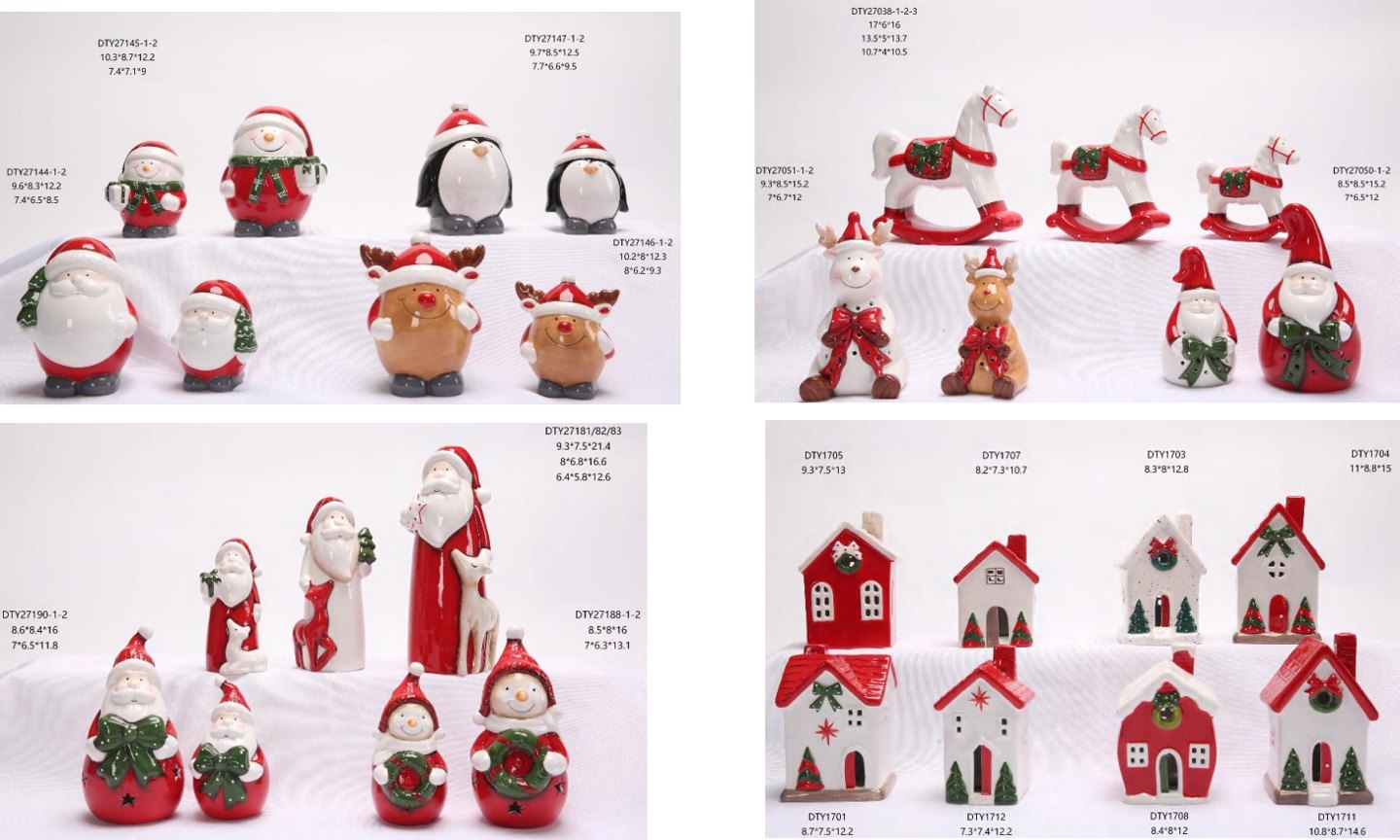
Want ceramic decor your competitors can't buy from a catalogue?
Every item in a wholesale catalogue is available to every buyer who opens it. That is the catalogue's strength and its weakness: two shops in the same town can end up selling the same Christmas tree, and when the same item appears on three websites, the only thing left to compete on is price.
A custom program breaks that pattern. When the design, the colourway or the packaging is yours, the item cannot be price-matched against an identical piece somewhere else, and customers who liked it last year come back to you for it. That is why importers and wholesalers ask for OEM and ODM programs: not because they enjoy the extra work, but because an own range protects margin and builds repeat business in a way a catalogue range cannot.
The extra work is real, though. A custom program has more steps than a catalogue order, more decisions, and more places where it can go wrong. The buyers who get the best results from custom programs are not the ones who spend the most — they are the ones who understand how the process runs before they start it. This guide explains that process, so you can judge a supplier on how they run it.
Why do custom ceramic programs go wrong?
Most failed custom programs fail in one of three ways, and all three are avoidable.
- The design is promised before it is checked. A buyer sends a sketch or a photo, the supplier says yes, and only weeks later — after samples have been made — does it turn out the shape cannot be produced that way, or the colour will not fire as shown. The rule that prevents this is simple: feasibility is confirmed with our production department first, per item, before any commitment is made. A supplier who promises first and checks later is a risk, however friendly the answer sounds.
- The artwork is unclear. "Make it like this photo" is not a brief. Without dimensions, colours, placement and the file itself, the sample comes back wrong, and each correction costs another round of sampling. The fix is to send the actual artwork file, mark exactly where it goes, and state the colours by reference — a Pantone code, a physical colour swatch, or an approved sample — rather than describing a colour in words.
- Quantities are never stated. A buyer asks for a price with no quantity per style, so production cannot confirm anything: the per-style quantity decides how a run is planned, how the painting is organised, and whether the program works at all. State the quantity you have in mind per style from the start, even if it is approximate. Quantities are discussed per style and confirmed per style — there is no single blanket figure, and any supplier who quotes one before seeing your mix has not really checked.
OEM or ODM: which fits your range?
OEM and ODM describe who supplies the starting point. In an OEM program, you supply the design: the shape, the artwork, or both. We produce it to your specification. In an ODM program, you start from one of our existing designs and adapt it: a different colour or glaze, your decal artwork, your packaging.
OEM fits when the design itself is the point — a village house in your town's style, a figurine character your customers recognise, a shape nobody else sells. It gives you the most control and the most exclusivity, and it also needs the most development: a new shape means a new mould, more sampling rounds, and a longer path to the first order.
ODM fits when you want a proven shape with your own look. Start from a piece in our Christmas collection, change the palette to match your range, add your decal, and put it in your gift box. The shape is already proven, so the program moves faster and the sampling is usually simpler — and the result still cannot be bought from a catalogue by your competitor.
A useful way to choose: if the item would still sell without your changes, ODM is probably enough. If the item only exists because of your idea, it is an OEM program. Many buyers run both at once — a few OEM anchor pieces that define the range, with ODM adaptations filling out the volume lines. Our guide to building a seasonal ceramic assortment explains how those layers work together.
How does a custom program run, step by step?
A well-run custom program follows the same five steps, whatever the design:
- You send the starting point. Marked catalogue pages, your artwork file, or a short brief: which styles, what should change, the quantity you have in mind per style, and your delivery window.
- We check feasibility per item. Our production department confirms whether each style can be made as described — shape, decoration, glaze, packaging — and flags anything that needs a different approach before any price or date is discussed.
- Details are confirmed per style. Specification, quantities per style, the sample fee and the sampling time are agreed in writing. Nothing is promised before this step.
- Samples are made and checked in hand. The physical sample is the specification: colour, finish, decoration and packaging are checked on the piece itself, not on a photo. If a sample is not right, it is revised and re-checked.
- The order is confirmed, produced and inspected. Production runs to the approved sample, with inspection points agreed before production starts — see how we check custom runs on our quality-control page — and shipment follows the agreed route.
The step buyers most often skip is the second one. Feasibility first is what keeps a program on schedule: a week spent checking before sampling saves a month of corrections after it.
What can actually be customised — colour, decal, packaging, new shapes?
Four things change in most custom programs, and each one carries different implications:
- Colour and glaze. The simplest change, and the most common. A proven shape in a new palette — a matte finish instead of gloss, a deeper red, a softer cream — can make a catalogue piece read as your own. Hand-painted detail varies slightly from piece to piece, so check the colour and finish on the physical sample, in daylight and under shop lighting, before approving it.
- Decal artwork. Lettering, logos and printed decoration are usually applied as a decal: the artwork is printed, applied to the glazed surface and fired on. A buyer once asked us whether lettering on the lower part of a piece was direct printing — it was a decal, and that distinction matters, because a decal can carry fine lettering and logos that direct printing on a curved ceramic surface cannot. Send vector artwork where you can, and confirm the placement per item.
- Packaging and labelling. Gift boxes, display boxes, plain brown export cartons, product labels and inner-box labels are all confirmed per item. Standard safe packing is each piece wrapped and boxed for export; gift packaging is arranged when the customer asks for it. Tell us early if your market needs specific labelling, so it is built into the program rather than added at the end.
- New shapes. A new shape means a new mould, and that is the biggest step in a custom program: more development, more sampling, and a longer lead to the first order. It is worth it when the shape is the reason the item sells. Ask for feasibility first, and expect the answer per item — some shapes are straightforward, others need a different construction.
One thing no supplier can promise: an exact colour match from a screen photo. Screens lie about colour. The physical sample is the only reliable reference, and any colour decision should be made on it.
What should you confirm before you pay for samples?
Samples are where a custom program becomes real money, so confirm these points before you pay:
- The style list, in writing. Exactly which styles are being sampled, and what changes apply to each one. A sample fee is charged per style, and the list is what the fee covers.
- What the sample fee covers, and whether it is deducted from the first order. Ask the question directly and get the answer in writing before you pay. A fee that is deducted in full from the first order changes the risk of sampling considerably; a fee that is not should be priced into your decision.
- The sampling time, confirmed per program. Sampling usually takes around 10–15 days once the sample fee is received, but confirm the date per item before you plan around it — a new mould takes longer than a colour change on a proven shape.
- The delivery route for the samples. Samples usually go to your own forwarder; agree the route and the address in advance so nothing waits for an instruction.
- What happens if a sample is not right. One revision round is normal. Agree in advance how revisions are handled and whether they carry a further fee.
- Exclusivity. If the design is yours, ask whether it will be made only for you. Get the answer in writing.
- Quantities per style. Discuss the quantity you have in mind per style before sampling, so the sample reflects the real run and the confirmed details match the order you intend to place.
A supplier who answers these questions clearly, in writing, before asking for a fee is a supplier who has checked with production. A supplier who cannot answer them has not.
What to send us to start
Topreal Crafts is a ceramic manufacturer and exporter based in Xiamen. Our seasonal ranges cover Christmas, Easter, Halloween and Harvest ceramics, and we run custom programs for importers and wholesalers through our OEM & ODM service, with specifications confirmed item by item and custom runs checked before shipment.
To start a program, send us your marked catalogue pages or your design brief — the artwork, the colours, and the quantity you have in mind per style — via our contact page. In return, you get item-by-item feasibility and confirmed details on exactly those styles, and Lisa replies within one business day. Every program is quoted individually, on the styles you picked — no retail pricing, no online checkout — so the range you build is the range your customers see.
Have a collection in mind?
Share a product reference, a category you are sourcing, or the occasion you are planning for. Lisa is ready to help with your collection inquiry.
Xiamen Topreal Crafts Co., Ltd.
Tel / WeChat / WhatsApp: +86 131 9407 9226
No.704, Building 21, Qiaowenli, Siming District, Xiamen, China
www.toprealcrafts.com ↗