How to Build a Seasonal Ceramic Assortment: Anchor, Volume and Novelty Lines
A seasonal ceramic range succeeds or fails as a whole, not item by item: one beautiful figurine will not carry a Christmas table, and a shelf of lookalike pieces will not hold a buyer's attention. The buyers who build the strongest seasonal programs think in three layers — anchor lines, volume lines and novelty lines — and give each layer a clear job before they start choosing individual designs. Here is how each layer works.
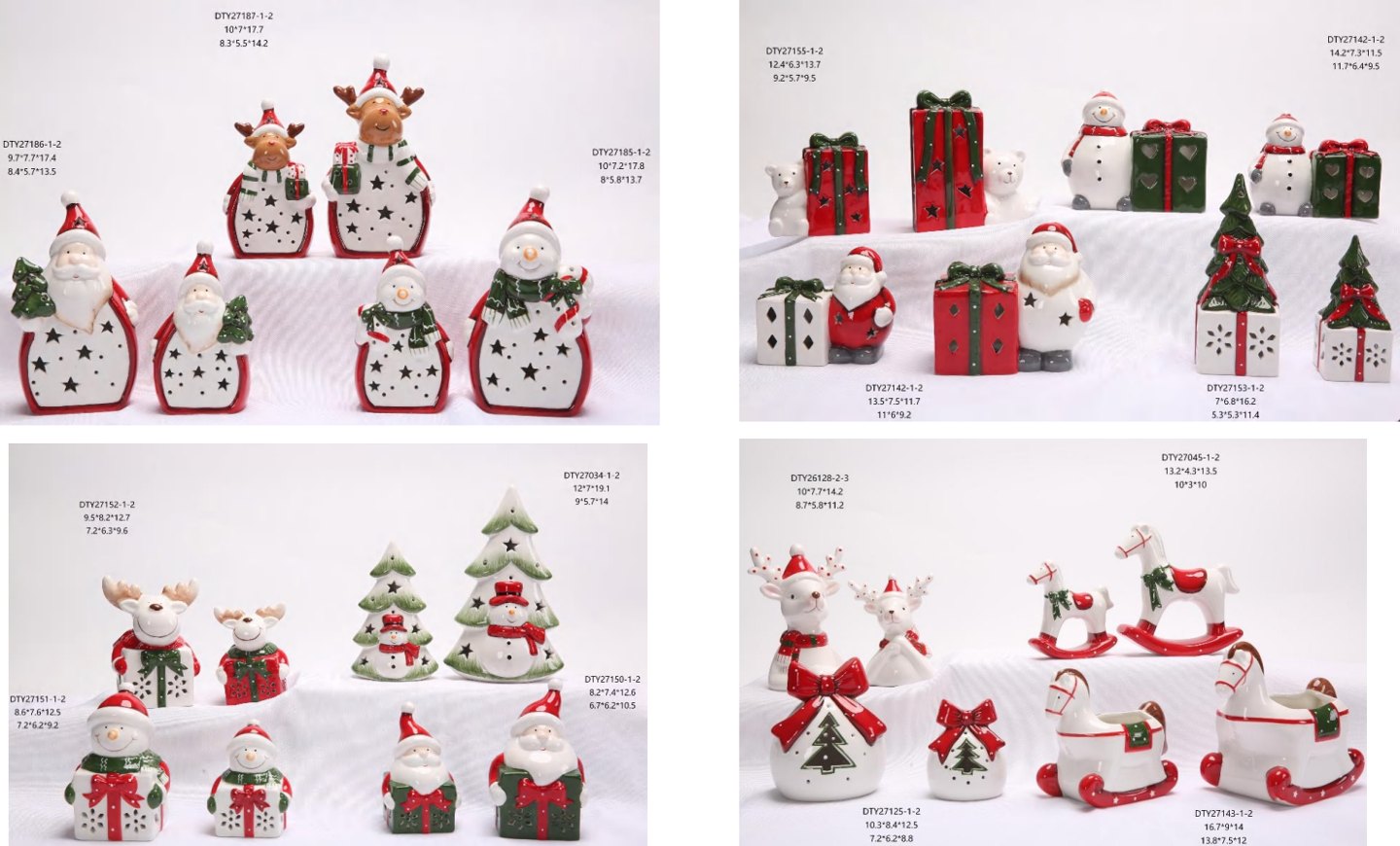
Anchor lines: the pieces the range is recognised by
Anchor lines are the pieces a customer remembers. They are usually the most distinctive designs in the range — a hand-painted Christmas village house, a sculpted Easter bunny, a lighted Halloween pumpkin — and they set the tone for everything else. Anchors do three jobs:
- They define the look: the anchor's style, palette and level of detail tell the customer what the rest of the range is about — a rustic, hand-finished anchor promises a different range from a glossy, brightly coloured one.
- They carry the display: in a shop window or on a seasonal table, the anchor is the piece that stops people, and the rest of the range supports it.
- They justify the range: when a buyer presents the program internally, the anchor is the piece that makes the season feel worth stocking.
Anchors are usually the smallest part of a range by item count — a handful of designs rather than dozens. Because they are the most visible pieces, they deserve the most attention during sampling: check the hand-finished detail, colour and finish in daylight and under shop lighting, and confirm the packaging per item.
Volume lines: the pieces that sell through
Volume lines are the workhorses. They are simpler, more familiar designs — small figurines, ornaments, mugs and tabletop pieces — that sell at everyday seasonal prices and in larger quantities. They rarely win awards, but they are what makes the program pay:
- They are easy to buy: a customer who hesitates over an anchor piece will often take a smaller matching figurine or ornament without thinking twice.
- They repeat well: because the designs are simpler, colour and finish are easier to keep consistent from one production run to the next.
- They fill the range: the same theme expressed in several small items looks like a collection rather than a single object.
The most useful volume lines echo the anchor: a hand-painted Christmas tree anchor works best alongside smaller trees, ornaments and figurines in the same palette and style, so the range reads as one family and the customer can buy at either price point.
Novelty lines: the pieces that create a reason to look
Novelty lines are the new ideas — a fresh shape, an unusual glaze, a lighted piece in a form the buyer has not stocked before. Their job is not to sell in large quantities, but to give the range a reason to be looked at again and the buyer something new to talk about:
- They test the market: a small novelty selection shows whether a new direction has legs, without committing the whole program to it.
- They refresh a repeat program: buyers who stocked the same range last year need a visible reason to come back, and two or three well-chosen novelties do that more effectively than a full re-design.
- They create conversation: a novelty piece is the one a sales team photographs, posts and shows first — and that attention lifts the whole range.
Novelties carry the most risk, so keep them a small share of the range and confirm them like everything else: physical sample first, specification confirmed per item.
Balancing the three layers
There is no single correct ratio — the right balance depends on the buyer's channel, price positioning and how much repeats from last year. A useful starting point: volume lines form the backbone, anchors define the character, novelties add a touch of newness. Then adjust:
- A first season with a new supplier: lean heavier on volume lines and a few strong anchors, and keep novelties small until the working relationship is proven.
- A repeat season: protect the proven volume sellers, refresh the anchors that sold through, and add a few novelties to give returning customers something new.
Whatever the balance, check the range as a whole before confirming it: lay the shortlist out and ask three questions — does it read as one season, does it offer something at more than one price point, and is there a clear reason for a customer to come back next year? If any answer is no, adjust the mix rather than adding more items.
Rotating the framework across the seasons
The same three layers work across the calendar, but the emphasis moves with the season:
- Christmas is the anchor-led season: the longest selling window, where displays matter most, so lighted houses and trees and hand-painted centrepieces earn their place. Our Christmas 2027 planning guide shows the sourcing timeline.
- Easter is volume-led: a shorter season, more gift- and table-focused, so a broad set of smaller pieces — eggs, bunnies, spring figurines — usually carries the program. See our Easter 2027 sourcing guide for the timing.
- Halloween is novelty-led: the shortest window and the most trend-sensitive, so a few striking new pieces alongside proven volume sellers keep the range fresh without over-committing. Our Halloween 2027 planning guide covers the timing.
- Harvest and autumn reward continuity: pieces that bridge Halloween into the autumn table, so the range does not end with a single date.
Planning the layers season by season turns one good season into a program a buyer can build on year after year.
Before you confirm: the checks that apply to every layer
Whichever layer a design belongs to, confirm its specification item by item — shape, decoration, glaze and finish, packaging and labelling — on the physical sample, not on a catalogue photo. For lighted pieces, confirm the light source, battery or power arrangement and switch type per item; for food-use pieces, confirm food-contact suitability per item and per destination market. Agree the inspection points before production starts, so the first-piece check and the pre-shipment check are arranged in advance.
How Topreal supports seasonal assortment programs
Topreal Crafts is a ceramic manufacturer and exporter based in Xiamen, with our production department in Dehua, Quanzhou. Our seasonal ranges cover Christmas, Easter, Halloween and Harvest ceramics, and we support importers and wholesalers from range planning and sampling through to shipment, with specifications confirmed item by item. Browse our collections to see how the seasonal directions sit together, or talk to us about a custom program if your range needs shapes, decoration or packaging developed for your market.
If you are building a seasonal assortment, send your target season, categories and delivery window via our contact page, and we will reply with suitable selections. Every program is quoted individually — no retail pricing, no online checkout — so the range you build is the range your customers see.
Have a collection in mind?
Share a product reference, a category you are sourcing, or the occasion you are planning for. Lisa is ready to help with your collection inquiry.
Xiamen Topreal Crafts Co., Ltd.
Tel / WeChat / WhatsApp: +86 131 9407 9226
No.704, Building 21, Qiaowenli, Siming District, Xiamen, China
www.toprealcrafts.com ↗